


The Impact of the Church on the Revolution

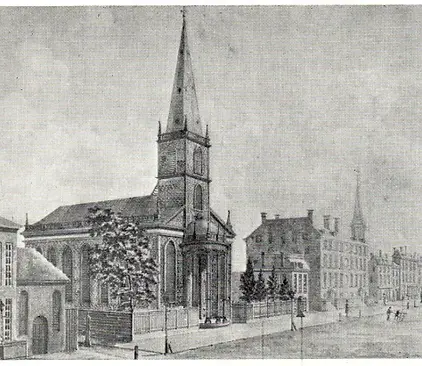
The American Revolution was a political and military event, but its roots reached deep into the religious life of the colonies. Decades before the first shots at Lexington, a sweeping religious revival known as the First Great Awakening (roughly the 1730s through the 1760s) reshaped how ordinary Americans thought about authority, equality, and liberty.¹
Itinerant preachers such as George Whitefield and Jonathan Edwards drew enormous crowds — Whitefield is estimated to have reached the great majority of the colonial population over his preaching tours, sometimes addressing audiences in the tens of thousands.² Their message that all souls stand equal before God, delivered in plain and direct language, encouraged common people to question established hierarchies. If individuals could challenge the authority of entrenched churches, many concluded, they might also question a distant and unresponsive government.³
The Awakening also helped knit the colonies together. As the first truly inter-colonial movement, it drew Americans from different regions into shared experiences and a common vocabulary of “liberty,” “justice,” and “freedom,” fostering a sense of unity that crossed colonial boundaries.⁴ Historians widely credit it with helping prepare the cultural ground for revolution, and the revival even spurred the founding of colleges — among them Princeton, Brown, Rutgers, and Dartmouth.⁵
When the crisis came, the church remained at the center of public life. Town meetings and mass protests were held in meeting houses; the gathering that preceded the Boston Tea Party filled the Old South Meeting House.⁶ Ministers preached “election sermons” and fast-day sermons that framed the contest with Britain in moral and scriptural terms, and figures such as John Witherspoon argued that civil and religious liberty stood or fell together.⁶
It is fair to note that the picture was not uniform: the colonies were religiously diverse, many devout Christians remained loyal to the Crown, and historians continue to debate just how much the Awakening directly caused the Revolution.¹ But the broad influence is hard to deny. The habits of self-government nurtured in congregations, the conviction that resisting tyranny could be a God-given duty, and the unifying power of a shared faith all helped make independence both thinkable and achievable. For a church looking back on the founding era, this is perhaps the most enduring legacy of all.
SOURCES
1. “Great Awakening,” HISTORY; Britannica, “Great Awakening.”
2. “The Great Awakening,” Bill of Rights Institute (Whitefield's reach).
3. “The Great Awakening's Role in the American Revolution,” AmericanRevolution.org.
4. “The Great Awakening Affected American Unity …,” American Heritage Education Foundation.
5. “The First Great Awakening,” American History Central (founding of colleges).
6. “The Great Awakening and the American Revolution,” Journal of the American Revolution; “Christianity and the American Revolution.”